
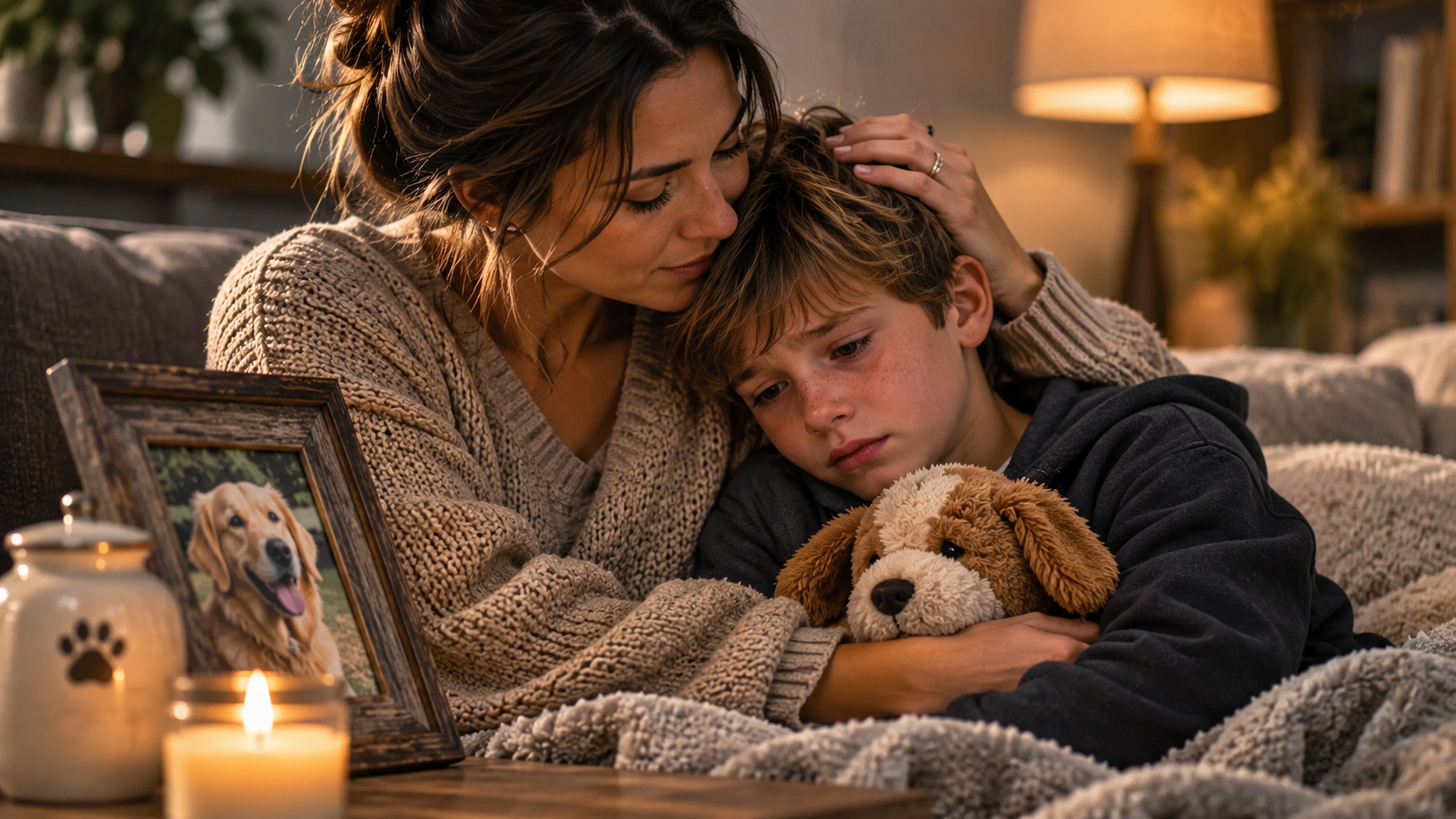
Learn how to explain pet loss honestly, support children's grief and create meaningful ways to remember a beloved animal.
Use clear, age-appropriate language
Explain that the pet died and its body no longer works. Avoid phrases such as went to sleep, which can confuse younger children. Answer questions simply and allow the child to return to the conversation later.
Make room for different reactions
Children may cry, ask repeated questions, become quiet or return to playing quickly. Grief can come in waves. Let them know that sadness, anger and moments of happiness are all acceptable.
Address guilt directly
A child may wonder whether something they said or did caused the death. Reassure them when appropriate that the loss was not their fault. Explain what happened honestly without unnecessary upsetting details.
Create a remembrance together
Invite your child to draw a picture, make a memory box or share a favorite story. Participation should be optional. A small ritual can give children a way to express feelings that are hard to put into words.
Maintain predictable routines
Keep familiar meals, school and bedtime routines where possible. Tell teachers or caregivers about the loss if your child would benefit from additional understanding.
Know when to seek support
If distress continues to interfere with school, sleep or relationships, a pediatrician or qualified child counselor can help assess what support is appropriate. There is no single timetable for grief.
Further reading
NIMH: Caring for Your Mental Health
Explore Joy Therapy counseling or request an appointment.